Your application is your first piece of work
Why a carefully designed application stands out in the skilled trades – and why effort on paper is a form of respect.
Friday afternoon in a joinery workshop. The master craftsman sits in the office behind the shop floor, a cup of coffee next to him that went cold long ago. In front of him are 23 applications for one journeyman position.
He has an hour. Then he has to get back out there, a kitchen is being delivered tomorrow.
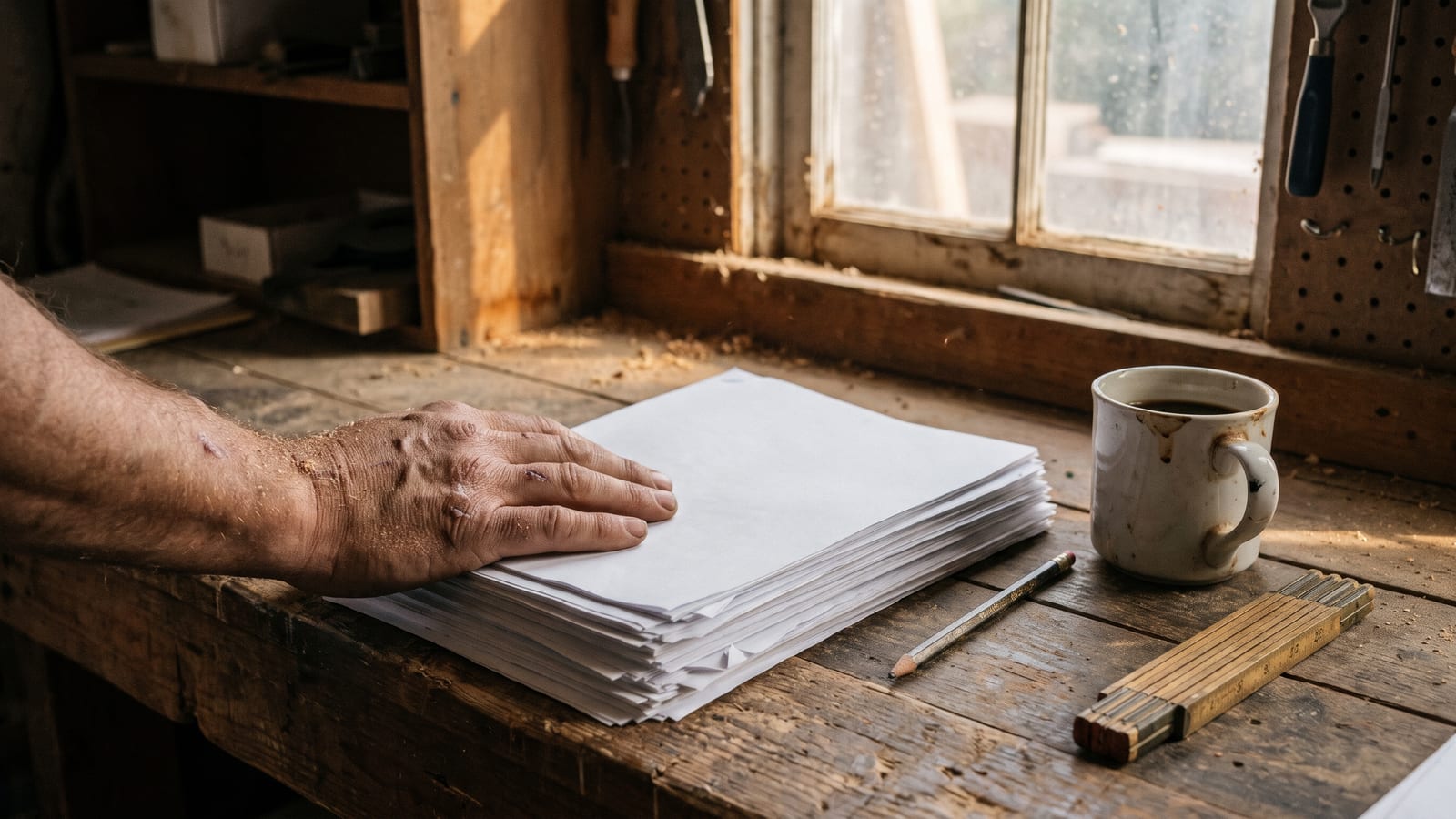
23 sheets that look the same
Most of the applications on his desk look alike. Black text on white, a table of dates, a photo in the corner. Often the same free template from the internet, sometimes still with the placeholder address in the header.
Nobody is to blame for that. If you learned to roof a house or build a staircase, you did not learn to design a document. Why would you. It is not your trade.
But this is where something easily underestimated happens. When 23 sheets look the same, they get treated the same. He flips through, reads the last employer, checks the qualification. Next. After a few seconds the sheet lands on one of two piles.
That is not malice. It is tiredness. And tiredness hits hardest the applications that give the eye nothing to rest on.
Two quotes for the same kitchen
Imagine you are having a kitchen built. You get two quotes.
The first is a note written in ballpoint pen. The prices are right, but the figures are crooked and one line is crossed out. The second is neatly set, with a letterhead, clear items and a small sketch.
Both firms might do equally good work. You do not know. All you have is the paper.
Which one do you trust more?
That is exactly how a master craftsman reads an application. Not because he likes design. Because the paper is all he has of you before you walk through his door.
The broken edge
Every joiner knows this moment. The board is cut and it fits. You could install it as it is.
And then you pick up the sandpaper anyway and break the edge. Two minutes nobody pays for. But whoever runs a hand along it later feels the difference. They feel that someone cared.
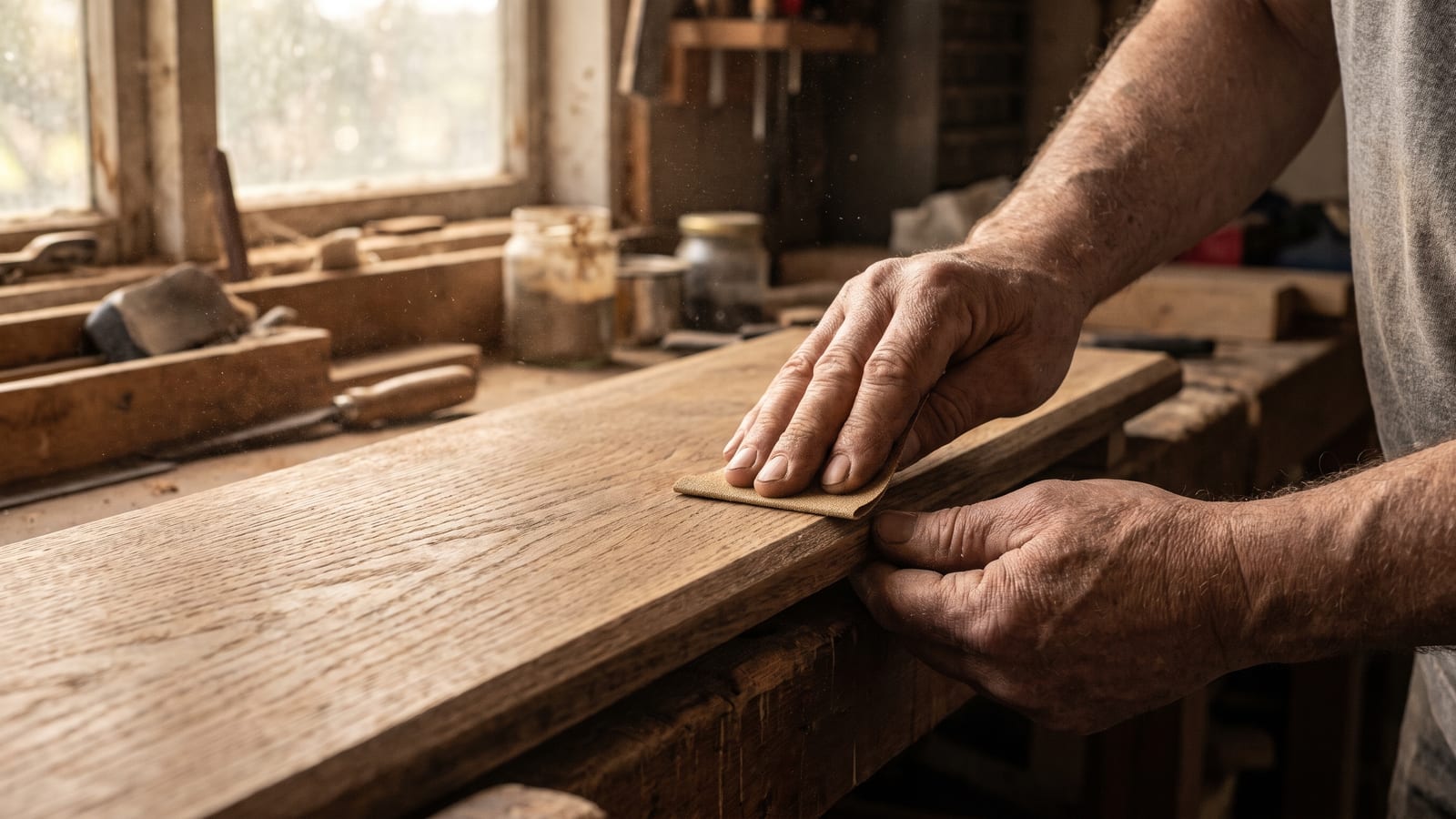
An application is your first piece of work. You hand it over before anyone sees what you can really do. A well-made application is the broken edge: it does not make you better than you are. But it shows that you cared.
Effort is a form of respect
Precisely because nobody expects a bricklayer to be a designer, a thoughtful application stands out. It tells the person on the other side of the desk:
"I took time for you. I want this job, not just any job."
That is not superficial. It is the same attitude you hope for in a good journeyman: taking his shoes off at the customer's door, leaving the site clean, not just smearing over the joint. Whoever makes their application properly gives a small preview of how they work.
And it is respect in both directions. The master craftsman sets aside an hour for 23 people. An application that makes reading easy is an answer to that hour.
What a good-looking application cannot do
To be honest: a beautiful application will not get you a job you cannot do. If you cannot build stairs, no cover page will make you a stair builder.
But it can do something else. It makes someone look more closely. It gets your experience read instead of skimmed, and gives it a chance to speak for itself. Among 23 applications, that is often the whole difference.
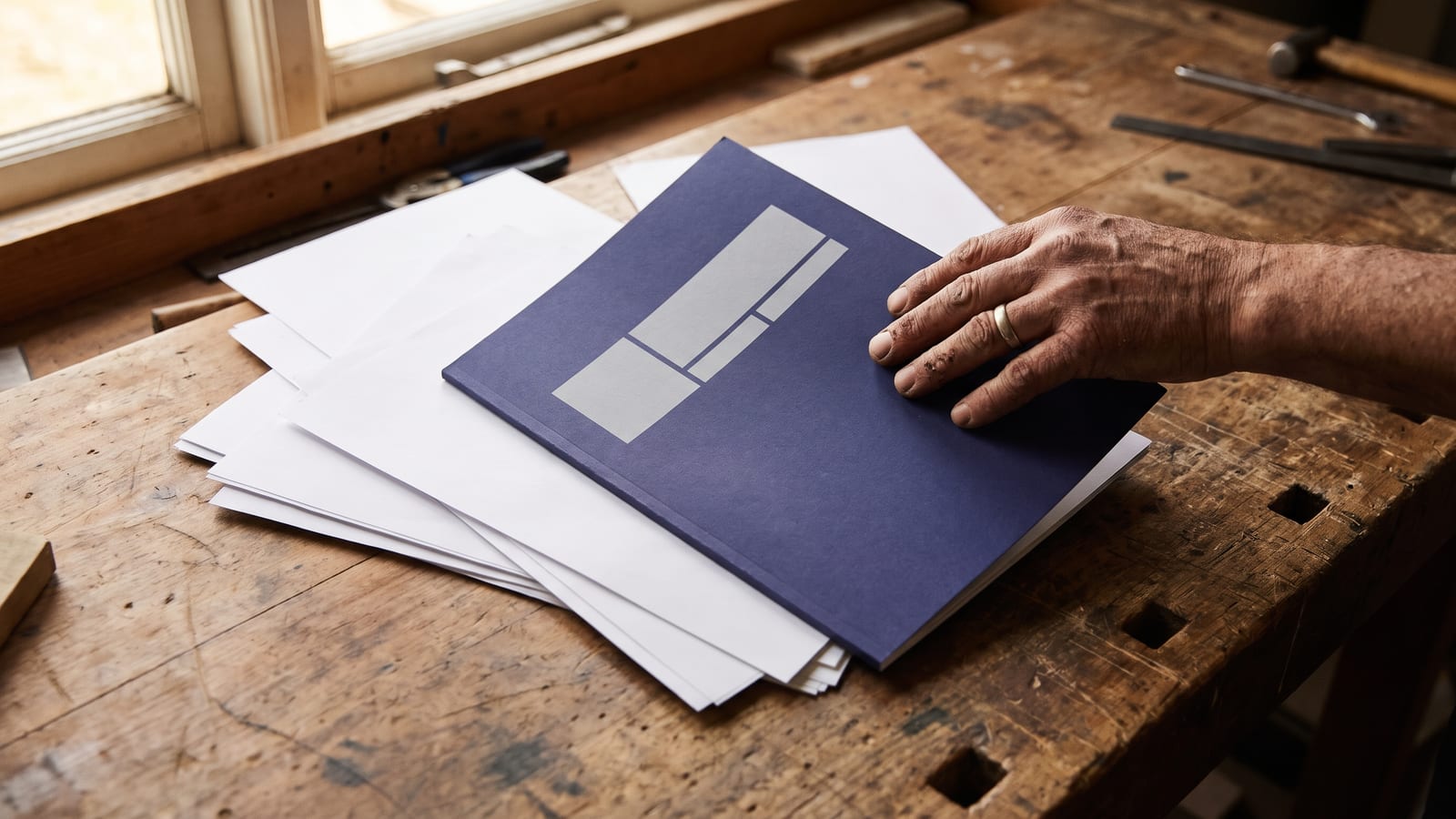
As long as people hire people
You often hear that applications will soon be sorted by software only. In big corporations that may be true. At the joinery, the roofer, the plumbing firm around the corner, there is still a person at the end, flipping through.
And as long as people hire people, it will stay that way: decisions are not made with the head alone. People remember the application that was different. The one where they could tell someone had made an effort.
And if I am not a designer?
That is exactly why we built Applyr. You enter your details the way you know them: jobs, qualifications, what you can do. Applyr turns them into a finished set with cover page, cover letter and CV, all in one style. You choose from 25 designs, plain or more striking.
You do not need to design anything. Just as your customer does not need to understand joinery to notice that their kitchen is well built.
What was the moment you realised that paper does make a difference? Write to us at support@applyr.biz, we would love to hear it.
Frequently asked questions
- Is a well-designed application worth it in the skilled trades?
- Yes. In small firms the master craftsman usually reads applications himself, often between two jobs. A clear, careful application makes him look more closely and shows that you take the position seriously.
- Is a free template from the internet a bad idea?
- Not wrong, but interchangeable. When many applications use the same template, none of them stands out. Complete details and a clear structure matter most, and a design of your own helps you not to disappear in the pile.
- Do I need design skills for a good-looking application?
- No. With Applyr you only enter your details. Applyr sets cover page, cover letter and CV in one of 25 matching designs.
This post belongs to Applyr, a tool for job application documents. The advice above holds whatever you write with.